oneLearning
- Upload own materials
- Videos, PDFs, tests
- See who is where
An employment contract today. The full document lifecycle tomorrow. The same system.
The question isn't what the system can do. It's how much work it takes off HR's and managers' shoulders.
The system's goal is not just to produce the document — but to make it retrievable later exactly what happened.
Who accepted the document?
The system clearly shows which party confirmed the acceptance.
When did acceptance happen?
The timestamp is logged and retrievable at any time.
Which email address received the code?
The code delivery target is visible — no need to search through emails.
Which document version was in effect?
Acceptance is tied to the specific version, not just the filename.
Was a receipt generated?
The acceptance receipt is retrievable and verifiable separately.
Has the document changed since then?
If a modification occurred later, it is visibly traceable in the audit trail.
What status is the process in?
At a glance: awaiting acceptance, closed, or requires further review.
During an internal or external review, all this data is available in one place, in a readable format.
From onboarding data collection to acceptance and archiving, the process stays in one system — HR doesn't print, scan, ping-pong Word files or re-type the same data. What used to be hours of admin per hire now assembles automatically.
Required personal and HR data is collected once, in one place. HR doesn't have to re-type the same details.
All incoming data is visible in one workflow, so review stays quick and transparent.
Required HR documents are generated from the approved data without copy-paste work.
Documents can be accepted online with OTP or signed with QES for official use — without paper loops: no print-sign-scan-return cycle, acceptance is done in minutes.
Final documents and acceptance trail are stored in a retrievable digital employee file.
Hours of HR admin per hire disappear — no printing, scanning or chasing, with faster payback.
Most systems just file the document away. oneDox runs the whole process — and proves it happened.
New-hire data capture, document generation and process steps in one flow.
OTP acceptance or QES signing — same surface, same audit trail.
Timestamps, event chain, archived acceptance receipt — every step recorded.
Independent verification, EU DSS validation, report and export — provable later, too.
Document + process + evidence — in one place.
The document's path from generation to archive — same trail, same evidence.
The steps of the employee and the employer are logged separately — so it's always visible later who accepted which document version and when.
Both the employee and the employer can confirm acceptance with their own unique one-time code. The system automatically tracks where each party is in the process.
An archived PDF receipt is generated for each acceptance — retrievable and verifiable at any time.
The system logs the time, parties, status and the linked document version. No need to search through emails and filenames during a later review.
A connected event chain in the background protects the integrity of the log — it works on the IT layer; HR doesn't need to deal with it.
The detailed technical solution can be found in the 'Technical background' section.
A list for the employee. Proof for the company. The same process, from two sides.
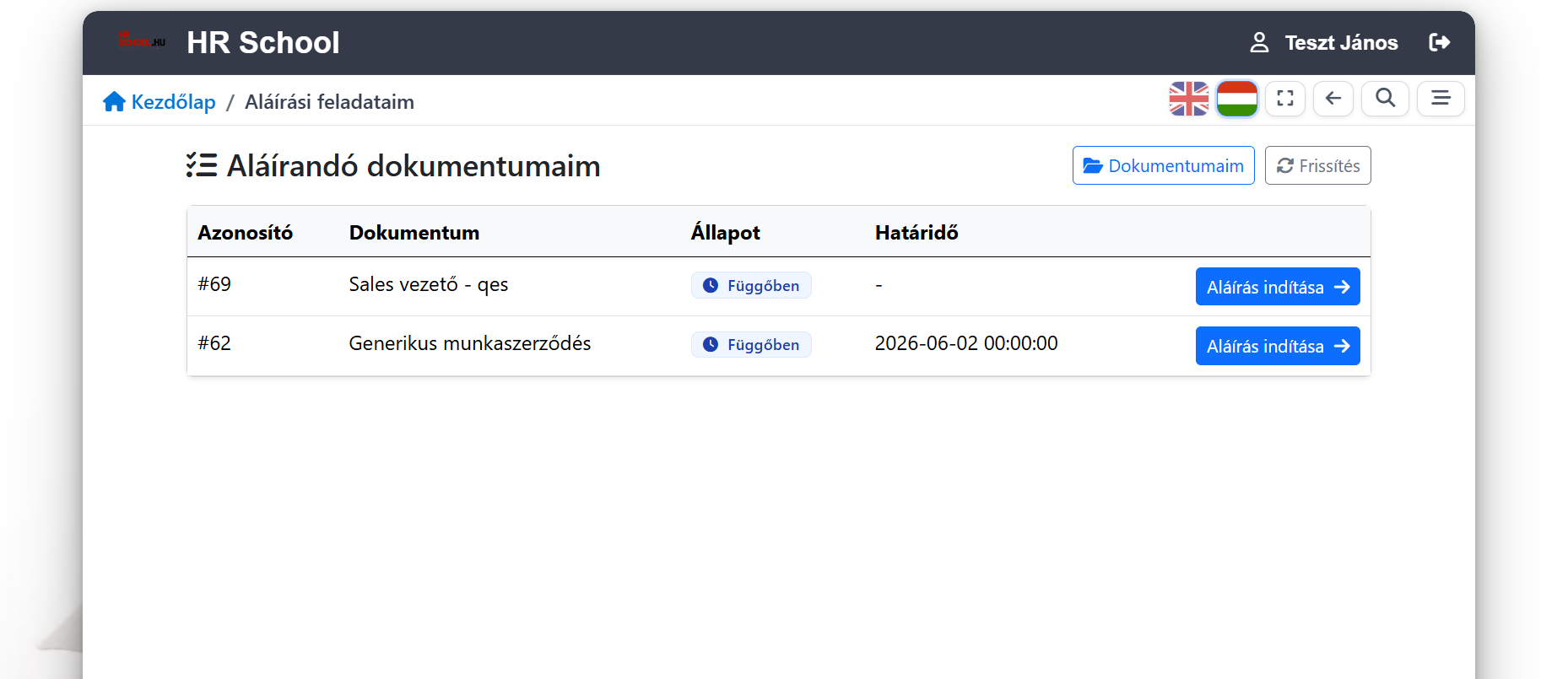
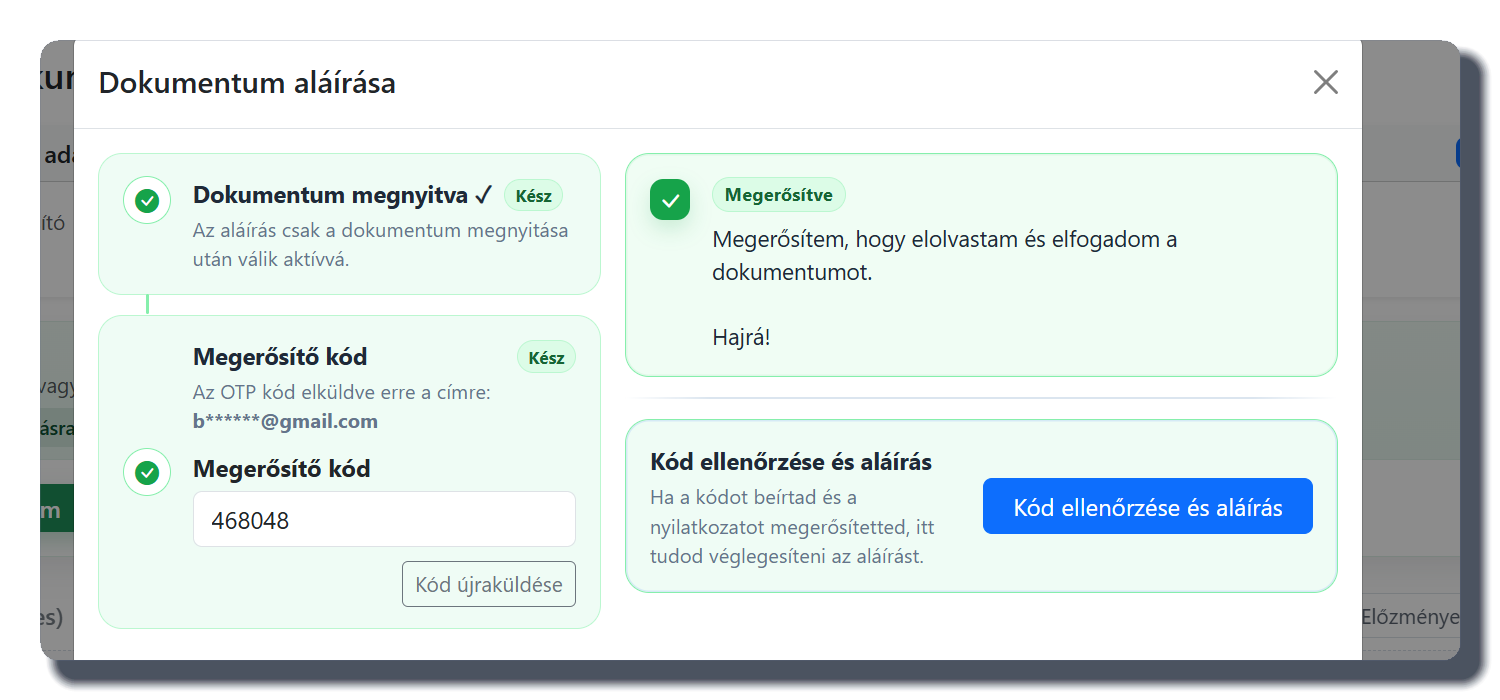
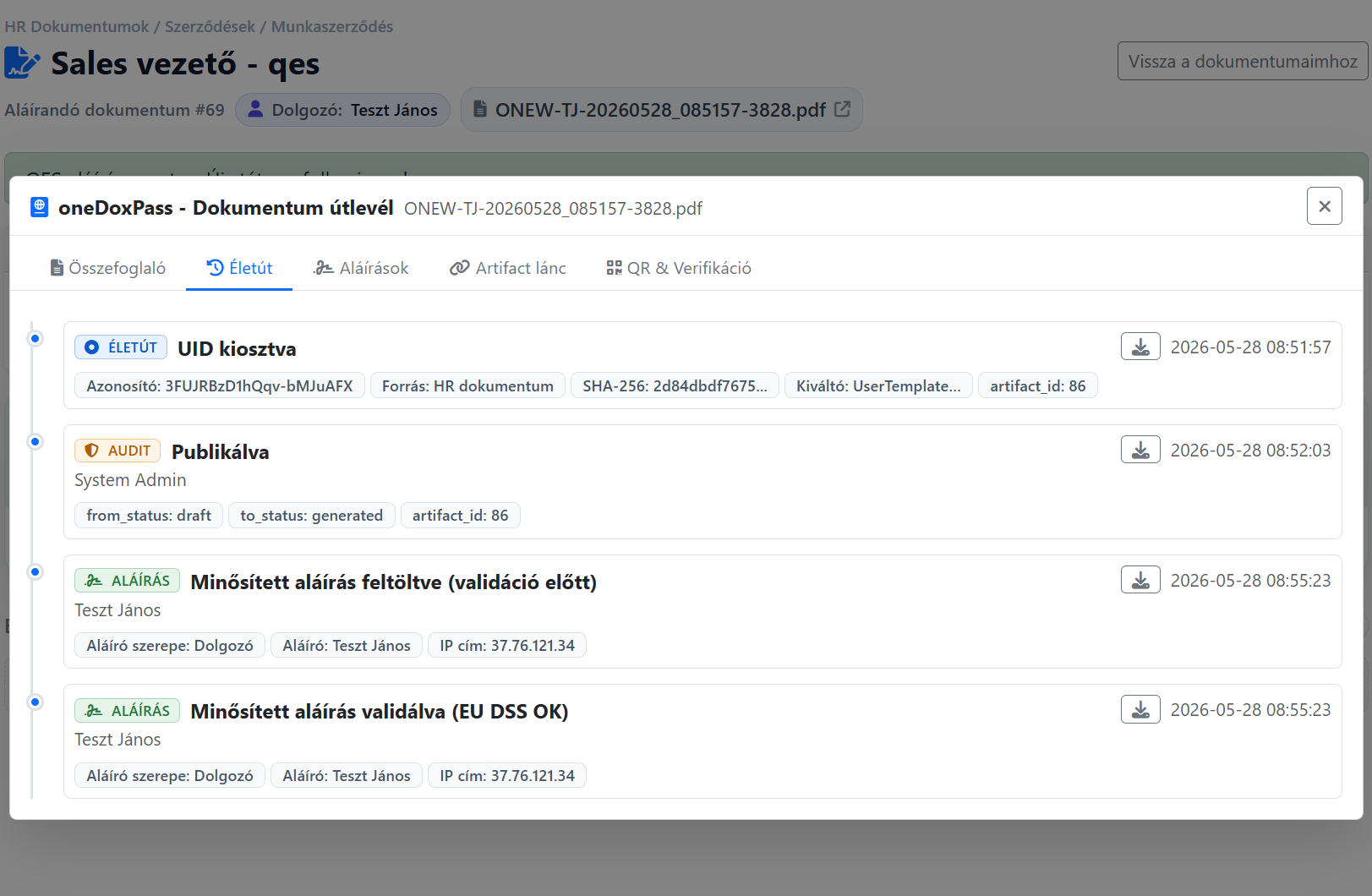
Real screens from live systems, with client and personal data redacted.
See the whole process in detail →Audit-ready reports help you quickly see which documents are signed, awaiting acceptance, expired or need review.
Audit-ready reports help you quickly see which documents are signed, awaiting acceptance, expired or need review.
What people ask most often before introducing it.
Supports both cloud (SaaS) and on-site (on-site) deployment. Detailed service models are presented on the oneSolution page.
View details →One Learning Zrt.
1021 Budapest, Budakeszi 51/D C.ép. II/5